Standing by the stairs of the Oskar Frederik’s Church in Gothenburg, I overheard someone say “He was striving to be someone like Feynman. He wanted to come up with the simplest explanations of the most complex ideas”. I can confirm that he was not just trying but was always successful in doing this. While I do not know what it took Richard Feynman to come up with those simplified explanations, I have been a witness to the passion, technique, effort, and the genius of Lennart Svensson in extracting the essence of the most complex ideas into teachable concepts. It is from him that I learned how to learn, how to really understand, and how to teach. My first baby flights within academia are thanks to the 15 months I spent under Lennart’s wings.
About four weeks ago, I learned that Lennart had passed away after succumbing to an aggressive illness at the age of 49. I could not believe it then, and I still cannot believe it now; even after having been at his funeral service.
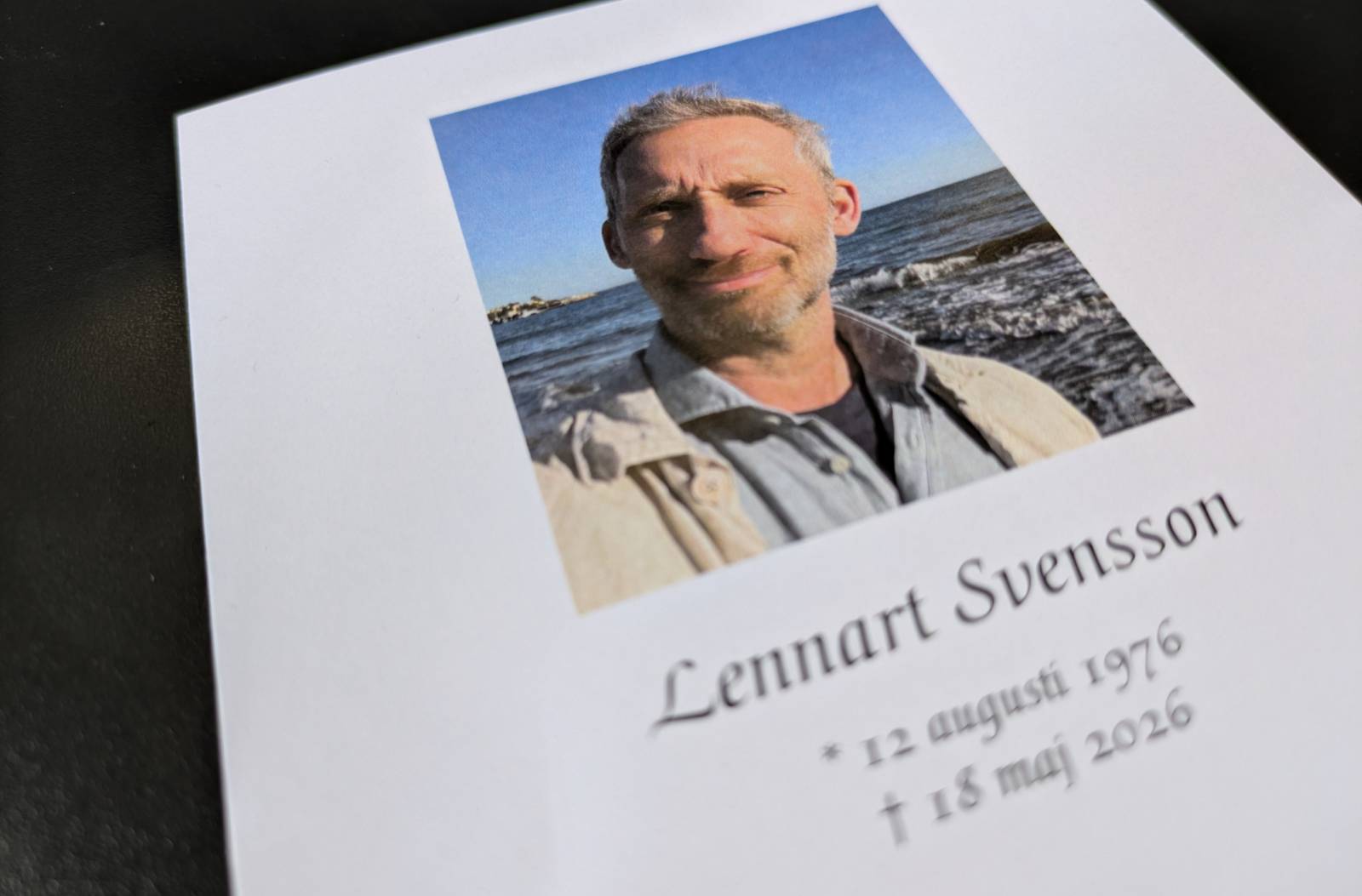
I will be selfish in this post and talk about the loss I feel without him, by reminiscing our time together.
I vividly remember the first time I interacted with him. Lennart was teaching few lectures in the Random Signal Analysis course during my first year MSc at Chalmers in the Fall of 2013, if I remember right. He taught us concepts that I had already studied during my bachelors; however, it was only after his courses I realised that I only had learned the names of concepts but not the concepts themselves, as Feynman would put it. Assuming I had made a reasonable impression on Lennart, I mustered the courage to seek a 60 credit—12 month—MSc thesis with him. While not sitting in another written exam was a high motivating factor for this choice, the opportunity of working with Lennart took precedence after our initial meetings. He assigned me to one of his PhD students as a co-supervisor (who is now a good friend), and I began my MSc thesis.
Fumbling along the way, I learned, a lot. While my technical skills were obviously improving, I was also silently observing and assimilating how to be a good researcher, and an even better teacher. I was amazed at the time and effort he would spend on making sure that I was learning. The one-on-one meetings where he would conjure up intuitions and explanations of abstract mathematical concepts are still afresh in my mind. There would be sparks in his eyes and the typical Lennart grin when he would come up with a good idea or an explanation. It was almost impossible for me to impress him to invoke such reactions.
It was not just the technicalities of teaching, but the patience and consideration Lennart had when teaching or discussing research ideas was unbelievable. I got to experience this even more when I was a teaching assistant with Lennart on his course after my MSc. He was experimenting with flipped classroom, and it seemed to me that he was investing unreasonable amounts of time on making the video lectures and designing the exercise sessions. I don’t think it was the case; to me it seemed so; Lennart was just being himself. The students caught on this; the course evaluation was glowing which was a testament to the pedagogue par excellence that Lennart was. I learned that he was awarded the Chalmers Pedagogical Prize, recently. No wonder.
After my MSc at Chalmers, I moved to Denmark to pursue my PhD, and now I know that Lennart had provided a generous recommendation which helped me get the PhD position at the University of Copenhagen.
In the past decade, we were not in active contact but knew about each others works as peers in academia. After my PhD, Lennart was routing faculty position opportunities in Sweden my way; while I did not take up those opportunities, I found him considering me for those opportunities a sufficient reward.
During my last visit to Chalmers University, couple of years ago, Lennart hosted me and we started discussing research ideas and collaborations with his team. At one point, when I was presenting my current research ideas, he distilled them down to their essence; making it almost seem trivial just because he could see the larger picture better than I could. I might have even caught a tinge of “researcher envy” which researchers are allowed to have when they wished they came up with the idea. He was still as generous, kind, and supportive as he always has been.
I have been thinking of him even more since I learned of his passing. The impact he had in shaping me is only becoming more apparent now. I had not realised how much I relied on him in my daily work and my academic personality.
A few days ago, late into the night, I was at my home office desk, staring at a wall and my eyes had welled up. I had drifted into thinking about Lennart. If this is how I feel, I cannot begin to imagine the grief and sadness that his passing has caused all his other family members, friends, and colleagues.
How can there be any consolation? What is the solace? Is this the appeal for faith and religion?
Perhaps I should be grateful that he spent some of his limited, precious, time shaping me. And all I can do in return is to carry him onwards through my life and work.